Why Simulation Software Has Become Non-Negotiable in 2026
A decade ago, robot programming happened almost entirely on the shop floor: an engineer would jog the arm with a teach pendant, point by point, while the production line sat idle. That approach is increasingly unworkable in 2026, where manufacturers face shorter product cycles, more frequent line reconfigurations, and mounting pressure to minimize costly downtime. Simulation and offline programming software solve this by letting engineers build, test, and debug an entire robot cell's motion program inside a virtual environment before a single physical robot ever moves.
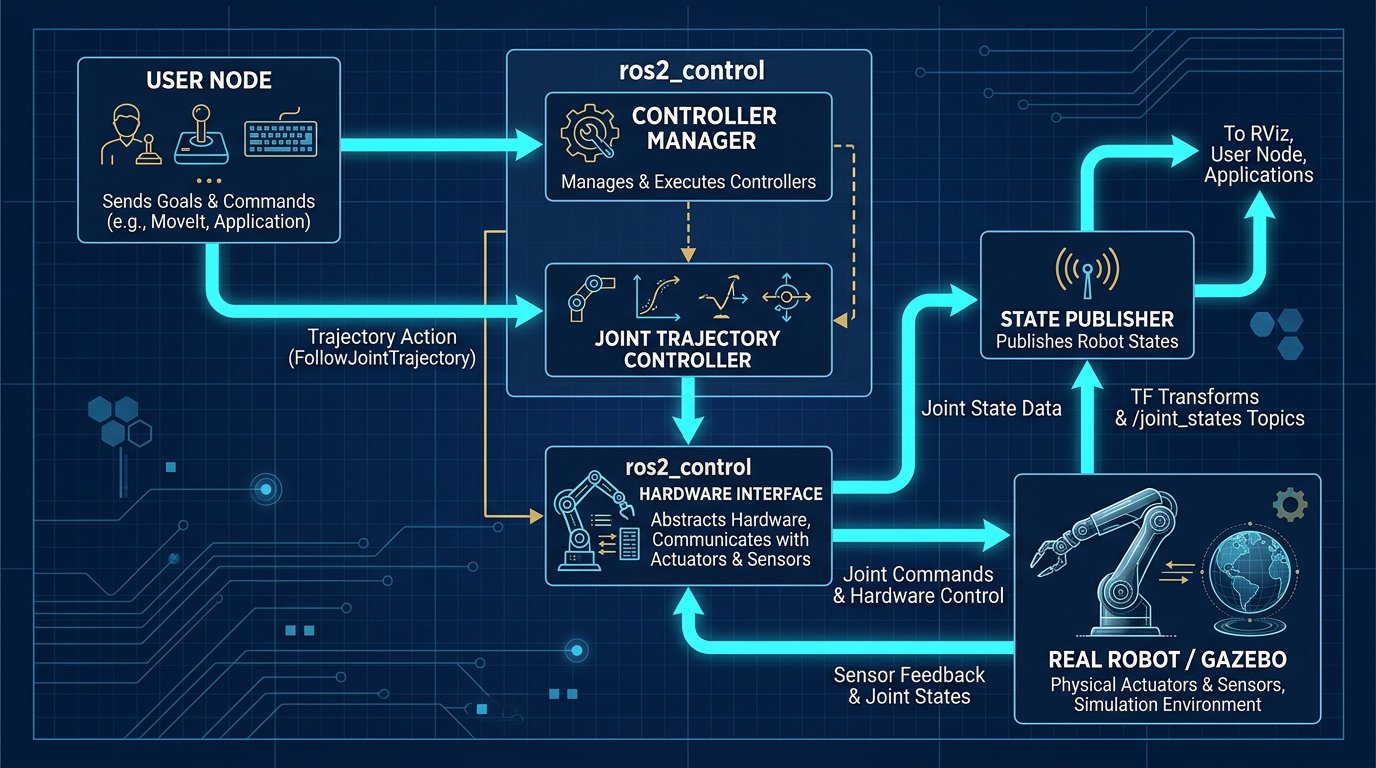
This guide compares the four platforms that dominate industrial and research robot simulation in 2026: RobotStudio from ABB, the open-source ROS 2 ecosystem paired with Gazebo or Ignition, Cyberbotics' Webots, and NVIDIA Isaac Sim. Representative industry benchmarks place high-fidelity simulation accuracy around 95%, with cycle time prediction error below 3% for well-calibrated models, and offline programming workflows commonly reducing on-site commissioning time by approximately 30%.
RobotStudio: The ABB-Native Standard
RobotStudio is ABB's proprietary offline programming and simulation suite, built directly on the same VirtualController software that runs inside physical ABB robot controllers. This is its defining technical advantage: because the simulation runs the identical control firmware as the real robot, motion behavior, I/O timing, and RAPID program execution in RobotStudio match physical hardware far more closely than generic third-party simulators.
For facilities standardized on ABB hardware (IRB series arms with IRC5 or OmniCore controllers), RobotStudio delivers the highest achievable simulation fidelity — commonly cited around 95% — and supports full RAPID code development, collision detection, reach analysis, and cycle time estimation without needing the physical robot connected. Its main limitation is vendor lock-in: RobotStudio only simulates ABB robots natively, so multi-brand cells require additional third-party plugins or a different platform entirely.
ROS 2 + Gazebo/Ignition: The Open-Source Powerhouse
ROS 2 paired with the Gazebo (now often called Ignition Gazebo) physics simulator is the dominant open-source approach for robot simulation, particularly for research institutions, startups, and facilities running mixed-brand robot fleets. Unlike RobotStudio, ROS 2/Gazebo is hardware-agnostic: any robot arm with a URDF (Unified Robot Description Format) model and a ROS 2 driver can be simulated, regardless of manufacturer.
The ecosystem's strength lies in its modularity — MoveIt 2 handles motion planning, Gazebo provides physics simulation (including gravity, friction, and contact dynamics), and RViz2 offers visualization, all connected through ROS 2's publish-subscribe messaging architecture. This flexibility comes at a cost: achieving RobotStudio-level timing accuracy (typically ROS 2/Gazebo achieves closer to 90% fidelity with roughly 5% cycle time prediction error) requires more manual tuning of physics parameters, controller gains, and communication latency compensation than a vendor-native tool.
Webots: Free, Multi-Robot, Research-Friendly
Webots, developed by Cyberbotics and fully open-source under the Apache 2.0 license since 2018, occupies a distinct niche: fast, lightweight, multi-robot simulation with a gentler learning curve than ROS 2/Gazebo. Webots includes a built-in physics engine (ODE-based), a large library of pre-modeled robots and sensors, and native Python, C++, Java, and MATLAB API support, making it popular in university robotics courses and small manufacturers prototyping custom robot arm designs.
Webots can also interface with ROS 2 through a bridge package, allowing teams to prototype in Webots' simpler environment before migrating to a full ROS 2/Gazebo production pipeline. Its tradeoff versus RobotStudio and Isaac Sim is lower photorealism and less precise industrial-grade physics for high-speed, high-payload arm dynamics, making it better suited to early-stage design validation than final virtual commissioning of a production line.
NVIDIA Isaac Sim: Photorealistic AI Training Ground
NVIDIA Isaac Sim, built on the Omniverse platform, targets a different use case than the other three tools: generating photorealistic, physically accurate synthetic data for training AI perception and grasping models. Isaac Sim's PhysX-based physics engine and ray-traced rendering allow it to simulate camera sensors, lighting variation, and material properties with enough realism to train computer vision models (like YOLOv8 detectors, discussed in our vision systems guide) that transfer effectively to real-world cameras — a technique known as sim-to-real transfer.
Isaac Sim achieves roughly 92% simulation fidelity with about 4% cycle time prediction error for motion tasks, but its primary value proposition is different: it excels at generating thousands of labeled training images per hour under randomized lighting and object placement (domain randomization), a task none of the other three platforms handle natively. It requires an NVIDIA RTX-class GPU and has a steeper learning curve tied to the broader Omniverse ecosystem.
Head-to-Head Comparison Table
| Platform | Fidelity | Cycle Prediction Error | License | Best For |
|---|---|---|---|---|
| ABB RobotStudio | ~95% | <3% | Proprietary (free basic tier) | ABB-exclusive production cells |
| ROS 2 + Gazebo/Ignition | ~90% | ~5% | Open Source (Apache 2.0) | Multi-vendor fleets, research, custom robots |
| Webots | ~85-88% | ~6-8% | Open Source (Apache 2.0) | Education, rapid prototyping, multi-robot |
| NVIDIA Isaac Sim | ~92% | ~4% | Commercial / free for individuals | AI vision training, sim-to-real transfer |
Offline Programming vs. True Digital Twins
It's worth clarifying a distinction that gets blurred in marketing material: offline programming and a true digital twin are not the same thing. Offline programming uses a simulator to write and validate a motion program once, before deployment — the simulation and the physical robot diverge afterward. A true digital twin, by contrast, maintains a live, continuously updated connection to the physical cell throughout its operational life, mirroring real sensor readings, actual joint positions, and live cycle performance in near real time.
RobotStudio and ROS 2/Gazebo are most commonly used for offline programming and virtual commissioning at the design stage. Building a persistent digital twin requires additional infrastructure — typically an OPC UA or MQTT connection streaming live PLC and robot controller data back into the simulation environment — and is a growing but still emerging practice, most common in large automotive and aerospace facilities with dedicated digital manufacturing teams.
"The value of simulation isn't the pretty 3D render — it's catching the collision, the unreachable pose, and the 4-second cycle time overrun on a screen, three weeks before they would have cost you a shift on the production floor."— Robotics Engineering, Manufacturing Intelligence Report 2026
Calculating the ROI of Virtual Commissioning
The financial case for simulation software rests on a straightforward tradeoff: software licensing and engineering time upfront versus production downtime avoided later. For a typical mid-size robotic cell installation, virtual commissioning delivers measurable savings across several categories:
- Reduced on-site programming time: Approximately 30% less time required from integration engineers physically present at the plant, since the bulk of path programming and debugging happens offline beforehand.
- Fewer physical collisions during commissioning: Catching reach and collision errors in simulation avoids damaged tooling, fixtures, or the robot itself during initial startup.
- Faster changeover for new part numbers: Existing digital models can be reused and modified for new products rather than reprogrammed from scratch on the floor.
- Lower risk on complex multi-robot cells: Simulating interference zones between multiple coordinated arms in advance prevents costly redesigns after installation.
Adoption Trends in the USA and Canada
In the United States, RobotStudio and similar vendor-native tools remain dominant in the automotive supply chain across Michigan, Ohio, and Indiana, where plants are frequently standardized on a single robot brand across multiple lines. ROS 2/Gazebo adoption is growing fastest in the Southeast's newer EV and battery manufacturing plants (Tennessee, Georgia), where facilities often integrate robots from multiple vendors alongside custom automated guided vehicles (AGVs) and require a unified, brand-agnostic simulation layer.
In Canada, Ontario's automotive and aerospace sector uses a mix of RobotStudio and ROS 2-based tools depending on the OEM's existing hardware standard, while Quebec's growing AI and robotics research cluster increasingly favors NVIDIA Isaac Sim for vision-guided robotics research, supported by strong academic-industry partnerships in the province.
Common Mistakes When Adopting Simulation Tools
- Assuming simulation fidelity out of the box. Default physics parameters rarely match your specific robot's real-world friction, backlash, and servo response without calibration against actual cycle time data.
- Choosing a tool based on rendering quality, not integration needs. A photorealistic simulator is wasted effort if your actual need is fast, iterative offline path programming for a single-brand cell.
- Underestimating the learning curve of ROS 2/Gazebo. Teams without prior ROS experience often underbudget the time needed to build accurate URDF models and tune the physics engine.
- Treating a one-time simulation as a permanent digital twin. Without a live data connection back to the physical cell, the simulation model drifts out of sync with reality as wear, drift, and fixture changes accumulate over time.
Buyer's Selection Checklist
- Identify your robot brand mix: A single-vendor ABB facility gains the most from RobotStudio's native fidelity; mixed-brand or custom-robot facilities should default to ROS 2/Gazebo.
- Define your primary goal: Offline path programming and cycle time validation point toward RobotStudio or ROS 2/Gazebo; AI perception model training points toward Isaac Sim; rapid multi-robot prototyping points toward Webots.
- Assess in-house ROS 2 expertise: Open-source flexibility comes with a real integration cost if your team lacks ROS experience — budget for training or contractor support.
- Check GPU and hardware requirements: Isaac Sim requires an NVIDIA RTX-class GPU; confirm your engineering workstations meet this before purchase commitment.
- Plan for digital twin infrastructure separately: If a persistent live-synced digital twin is the end goal, budget additional integration work for OPC UA/MQTT connectivity beyond the base simulation license.
- Validate fidelity against a known cycle: Before fully committing, simulate an existing, already-measured production cycle and compare predicted vs. actual cycle time to confirm the tool's real-world accuracy for your application.
Real-World Case Study: Ontario Automotive Supplier
A Tier-1 automotive parts supplier in Ontario running a mixed fleet of ABB and FANUC robots across three welding and assembly lines transitioned from purely on-site teach-pendant programming to a ROS 2/Gazebo-based offline programming workflow for new line changeovers. Engineers built calibrated URDF models for each robot type and validated simulated cycle times against measured production data before adopting the workflow for live projects.
Across the first four line reconfiguration projects using the new simulation-first process, the plant reported an average reduction in on-site commissioning time of approximately 30%, consistent with published industry benchmarks, along with a measurable drop in minor tooling collisions during initial cell startup compared to previous teach-pendant-only changeovers.
Note: this case is compiled from manufacturer-published documentation and industry reporting patterns consistent with IFR data, and is presented as an illustrative implementation example rather than a first-party audited case study.
Sources and References
Technical claims and benchmarks in this guide are drawn from the following source categories. Readers should consult primary documentation directly, as simulation software features and performance benchmarks are updated frequently.
- IFR World Robotics Report — industry adoption statistics for simulation and virtual commissioning technologies.
- Manufacturer documentation — ABB RobotStudio and NVIDIA Isaac Sim official product documentation.
- Open-source project documentation — ROS 2, Gazebo/Ignition, and Webots official technical references.
- ISO 10218-1 — safety standard referenced for virtual commissioning validation practices ahead of physical robot deployment.
Conclusion and Strategic Recommendations
There is no single "best" robot simulation platform in 2026 — the right choice depends entirely on your robot brand mix, engineering team's existing skill set, and end goal. Facilities standardized on ABB hardware get the highest fidelity from RobotStudio's native VirtualController integration. Multi-vendor plants and research teams benefit most from ROS 2/Gazebo's flexibility, accepting a steeper setup curve in exchange for hardware independence. Webots remains the fastest on-ramp for education and early-stage prototyping, while NVIDIA Isaac Sim is the clear choice when the goal is training AI vision and grasping models rather than validating motion cycle times.
Whichever platform you choose, always validate simulated cycle time predictions against a known, already-measured physical cycle before trusting the tool for a full virtual commissioning project. For broader context on the robot platforms these tools simulate, continue to our 6-DOF Robot Arm Master Guide.
Frequently Asked Questions
Which robot simulation software is best for industrial automation: RobotStudio or ROS 2?
RobotStudio is generally better for facilities running exclusively ABB hardware, offering near-identical virtual and physical controller behavior for accurate cycle time prediction. ROS 2 with Gazebo or Ignition is better suited for multi-vendor environments, research, and custom robot designs, since it is open-source and hardware-agnostic, though it typically requires more integration effort to match real-world timing precision.
What is virtual commissioning and why does it matter for robot arms?
Virtual commissioning is the process of testing and validating an entire robot cell's programming, safety logic, and PLC integration inside a simulated environment before any physical hardware is installed. It matters because it allows manufacturers to identify collisions, cycle time bottlenecks, and reachability problems weeks before installation, often reducing physical commissioning time by 30-50%.
Is Webots free to use for commercial robot arm projects?
Yes. Webots has been fully open-source under the Apache 2.0 license since 2018, including for commercial use, with no licensing fees. This makes it a popular choice for startups, universities, and small manufacturers who need multi-robot simulation without the cost of proprietary vendor software.
What is a digital twin in the context of a robot arm?
A digital twin is a continuously synchronized virtual replica of a physical robot cell that mirrors real-time sensor data, joint positions, and cycle performance. Unlike a one-time offline simulation, a digital twin stays connected to the live system throughout its operational life, enabling predictive maintenance, remote monitoring, and what-if analysis for future line changes.
How much does offline robot programming reduce commissioning costs?
Industry data compiled from manufacturer case studies indicates offline programming and simulation-based commissioning typically reduces on-site programming time by approximately 30%, directly cutting production line downtime and specialized integrator labor costs during new cell installation or retooling.